What Should Be in Your AI Governance Framework (A Mid-Market Guide)
Most mid-market companies know they need AI governance. The problem is they''re making it far more complicated than it needs to be. A practical framework starts with four things: approved tools, data rules, review requirements, and accountability.
What Should Be in Your AI Governance Framework
Most mid-market companies know they need AI governance. The problem is they're making it far more complicated than it needs to be.
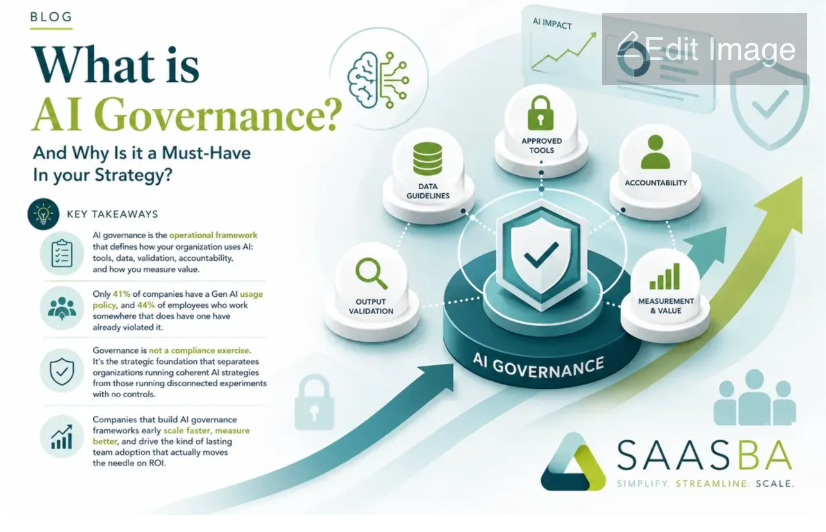
AI governance doesn't require a dedicated office, a 50-page policy document, or a committee that meets monthly to review use cases. It requires clarity on four things: what tools are approved, what data those tools can interact with, what outputs require human review, and who is accountable when something goes wrong.
That's it. Start there.
Why Mid-Market Companies Overcomplicate Governance
There are two failure modes in AI governance. The first is no governance at all — employees using whatever tools they want, with whatever data they have access to, with no oversight. The second is governance so complex that it becomes a barrier to adoption.
Mid-market companies tend to fall into one of these two traps. Either they have no governance because "we're not big enough to need it yet," or they try to build enterprise-grade governance infrastructure that their organization doesn't have the capacity to maintain.
The right answer is in the middle: a framework that's simple enough to actually use, specific enough to actually guide behavior, and flexible enough to evolve as the organization's AI use matures.
The Four Elements of a Practical AI Governance Framework
1. Approved tools.
Maintain a list of AI tools that have been reviewed and approved for use. This doesn't mean every tool needs a lengthy security review — it means employees know which tools are sanctioned and which aren't. Shadow AI (employees using unapproved tools with company data) is a real risk, and a simple approved list is the first line of defense.
2. Data rules.
Define what data AI tools can interact with. At minimum: what data can be entered into external AI tools (like ChatGPT), what data requires internal or private AI infrastructure, and what data can't be used with AI at all. This doesn't require a data classification project — a simple three-tier framework (public, internal, restricted) is enough to start.
3. Review requirements.
Not all AI outputs carry the same risk. A draft email is different from a contract summary. A market analysis is different from a financial forecast. Define which categories of AI output require human review before use, and what that review should look like. This is where role-specific judgment matters most.
4. Accountability.
When an AI-assisted decision goes wrong, who is responsible? The answer should always be a human — but which human, and for what? Clear accountability doesn't prevent mistakes. It does ensure that mistakes get surfaced, reviewed, and learned from rather than buried.
Getting Started Without Getting Stuck
The biggest risk in AI governance isn't moving too fast. It's spending so much time designing the perfect framework that you never actually deploy it.
Start with a one-page policy that covers the four elements above. Get leadership alignment. Communicate it to employees. Then iterate based on what you learn.
Governance is a living document, not a one-time project. The organizations that do it well treat it as an ongoing practice — not a box to check before they're allowed to use AI.
Explore Topics
Written by
Andy Worobel
Co-founder of SaaS Business Advisors and specialist in SaaS operations, digital transformation, and executive leadership.